Street Fighter / 1992 / 2008
Was Sheng Long Unlockable in the Original Street Fighter II?
The 1992 Sheng Long unlock rumor was a prank. Separate the mistranslated victory line, EGM’s joke and Gouken’s later Street Fighter IV appearance.
Was Sheng Long a hidden Street Fighter II boss?
The famous 1992 unlock story was a hoax. A mistranslation associated with Ryu’s victory text helped create the idea of a mysterious fighter, and Electronic Gaming Monthly turned it into an April Fools joke. Capcom’s own later account acknowledges both the error and the prank. [1]
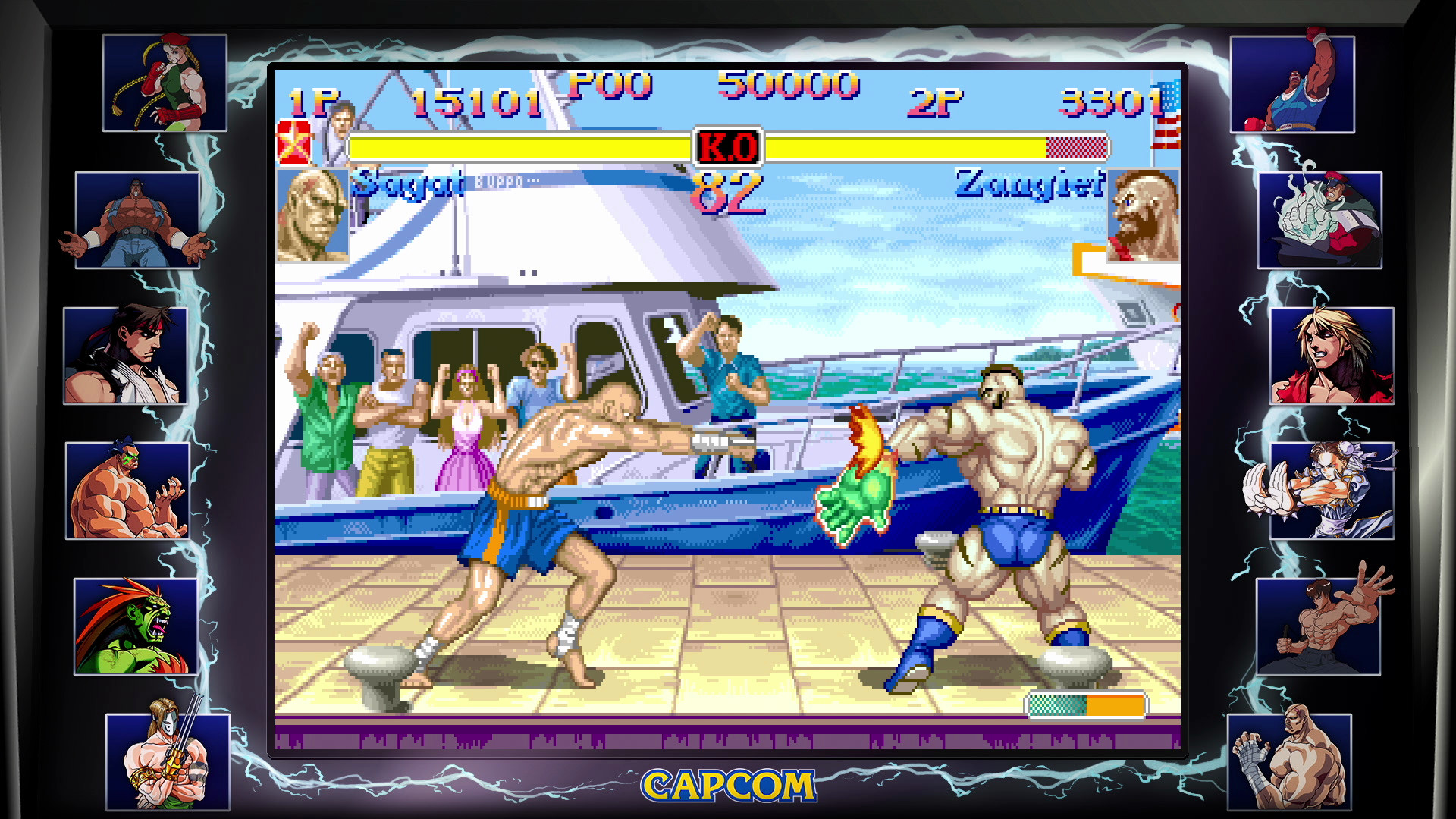
How a name became a challenge
A strange name in a fighting game is an effective seed for a rumor. Players already know that the roster has rivals, masters and bosses; an unexplained reference appears to fit that structure. A supposed unlock method then changes the question from “does this character exist?” to “can I perform the required feat?”
Our analysis: That shift is the trick. An elaborate requirement can make missing evidence feel like evidence of difficulty. When an attempt fails, the player may blame execution rather than reconsider the premise. A convincing instruction list is not the same as a verified mechanic.
The short historical record
- 1992: EGM’s April Fools story builds on the translation confusion.
- 2008: Capcom discusses the rumor while explaining Gouken’s inclusion in Street Fighter IV.
- The distinction: Later official references do not make the original Street Fighter II unlock story true. [1]
Where Gouken fits
Capcom’s 2008 post says producer Yoshinori Ono credited EGM’s jokes with helping lead to Gouken’s inclusion in Street Fighter IV. That is a specific, attributed development connection. It does not mean Gouken was secretly waiting in the original arcade game, or that every later hidden boss came from this one prank. [1]
The distinction is especially important when clips from different games are edited together. An actual character in a later release cannot verify a purported unlock in an earlier one. Version labels are part of the evidence, not a minor detail beneath the screenshot.
How to check an impressive unlock claim
| Check | Why it matters |
|---|---|
| Exact game and revision | A feature can exist in one release and not another |
| Unbroken demonstration | A still image cannot establish the steps that produced it |
| Independent reproduction | Repeating a rumor is different from repeating a result |
| Source and publication context | A joke page is not a developer guide |
Why this is more than an old prank
The appeal of a secret is that it makes a familiar game seem unfinished. There might be one more encounter beyond the part everyone knows. That feeling still helps questionable clips spread, even when viewers can search for evidence immediately.
The useful lesson is not that players were foolish. It is that a plausible story, a recognizable visual style and a difficult challenge can reinforce each other. Sheng Long remains a strong example of why the quality of the proof matters more than the confidence of the instructions.