The King of Fighters ’95 / KOF ’95 / OFFICIAL GUIDE 2011
How to Fight Omega Rugal with Mai in KOF ’95
SNK’s Mai setup explained: land short with weak grounded Musasabi no Mai, draw Dark Barrier and use the opening. Specific to KOF ’95.
What is Mai’s setup against Omega Rugal?
SNK’s KOF ’95 guide uses weak grounded Musasabi no Mai to land short of Omega Rugal, draw his Dark Barrier response, and create an opening for a jumping blowback attack. The move version and spacing matter: this is a specific setup, not a promise that any jump will beat him. [2]
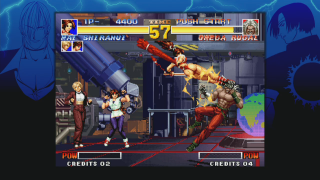
First, identify the version
KOF ’95 belongs to a specific point in the series. SNK’s history identifies its 1995 release, the introduction of team editing, and the return of the tournament invitation signed “R.” Later Rugal appearances should not be used as evidence for this version’s move properties. [1]
A clip from KOF ’98 or KOF XV can illustrate the character’s broader history, but it cannot prove the recovery time, damage or CPU behavior of KOF ’95. A shared move name is not a guarantee of identical rules.
The useful detail in SNK’s Mai guide
The archived NEOGEO Station guide describes using the weak grounded Musasabi no Mai so Mai lands short of Rugal. The resulting Dark Barrier response provides an opening for a jumping blowback attack. This is the guide’s specific setup, not a claim that any jump at any distance will work. [2]
For a reader following along, the important details are the character, the weak version of the move, the landing position and the response being sought. Removing any of those details turns a reproducible-looking sequence into vague advice.
What a pattern changes about the fight
Our analysis: An intimidating boss encourages hurried decisions. A documented pattern gives the player something more useful than “react faster”: an interaction to observe and compare. Did the intended response appear? Was the spacing the same? Did the attack start at the right moment?
This does not make the fight identical to a human match. Against another person, the opponent can recognize repetition and choose differently. A CPU encounter may reward learning a narrower response pattern. That distinction is part of understanding the challenge, rather than a reason to dismiss either form of play.
Claims that need more evidence
| Claim | Evidence needed |
|---|---|
| “The CPU reads every input” | Version-specific code analysis or controlled tests |
| “This move has zero startup” | Verified frame data for the exact release |
| “The same trick works in every KOF” | Separate checks for each game |
The sources here do not establish those sweeping claims. The official guide gives us a better foundation: one documented interaction in one version. A precise example is more useful than an invented technical explanation.
How to approach an old boss guide
Match the game and character first, then compare the setup before judging the result. If a sequence fails, look for differences in distance or move choice rather than assuming the entire guide is false—or that every failure is your reflexes.
Omega Rugal’s reputation makes the story memorable. The specific, observable response makes it informative. That is the difference between describing a boss as unfair and giving a player a concrete way to understand what is happening.